
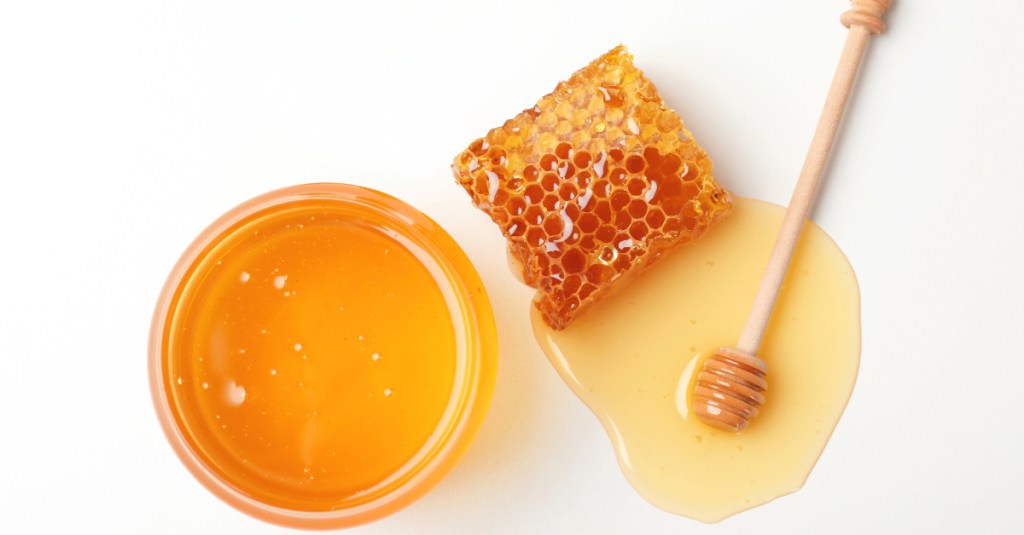
If you’ve been shopping for honey recently, you’ve likely encountered the term “raw honey”. But what does it actually mean when honey is labeled as “raw,” and why is it so highly regarded? Let’s dive into what makes honey raw, and explore some other marketing terms you might see that essentially mean the same thing.
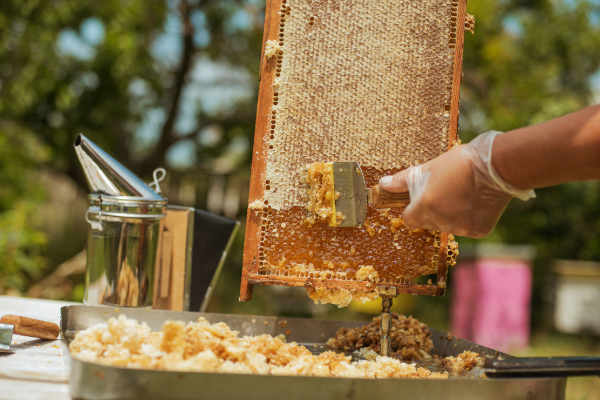
What Is Raw Honey?
At its core, ‘raw honey‘ refers to honey that has undergone minimal processing after it’s harvested from the hive. Raw honey is left in a more natural state. Here’s what makes it different:
- Unheated: Raw honey is not exposed to high temperatures. Heating destroys beneficial enzymes and nutrients, so raw honey retains these properties, including its antioxidants, vitamins, and minerals, which can support overall health.
- Unfiltered: Raw honey is only lightly strained to remove larger particles such as bits of wax or bee parts. This means it retains smaller bits of pollen, which can enhance its nutritional value. These small particles are also what give raw honey its natural texture.
- Unpasteurized: Unlike commercial honey, which often undergoes pasteurization (a process of heating to kill yeast cells), raw honey skips this step, keeping its natural enzymes intact. These enzymes can assist with digestion and offer other potential health benefits.
Why Raw Honey Is Considered Better
Many honey lovers prefer raw honey because it’s thought to be healthier than processed varieties. By avoiding the heating and filtering processes, raw honey retains more of its natural goodness. Some of the benefits linked to raw honey include:
- Rich in antioxidants that can help boost the immune system.
- Aid in digestion, thanks to enzymes that naturally break down food.
- Sooth sore throats with its anti-inflammatory properties.
- Natural energy from the sugars and vitamins it contains.
In addition to its health benefits, raw honey offers a richer flavor profile, often with unique floral notes depending on the flowers the bees visited.
Other Terms That Mean the Same Thing
While raw honey is the most commonly used term, there are several other labels you might see that can mean essentially the same thing. Let’s look at some of these terms:
- Unadulterated Honey: This term indicates that the honey has not been altered or diluted in any way. It’s not mixed with sugar, syrup, or any artificial additives, ensuring the honey is as pure and natural as possible.
- Pure Honey: While “pure” honey often signals that the honey is free from added sugars or syrups, it doesn’t always mean it’s raw. However, many brands use the term “pure” to imply their honey is in its natural, unaltered state, which can sometimes overlap with raw honey.
- Cold Extracted Honey: This term refers to honey that has been harvested and extracted without the use of heat. Like raw honey, cold-extracted honey retains its natural enzymes and nutrients, making it a great option for health-conscious buyers.
- Unprocessed Honey: Another way to describe honey that has not been subjected to heat or other industrial processing. Unprocessed honey remains as close to the natural product as possible, similar to raw honey.
- Unpasteurized Honey: This refers to honey that has not gone through pasteurization, which is a process of heating honey to kill yeast cells and extend shelf life. Unpasteurized honey is often raw, though it’s important to check the label for other processing details.
Why Choose Raw Honey?
Choosing raw honey means you’re getting a product that is close to its natural state, packed with nutrients, antioxidants, and enzymes that can support your health. With its rich and often unique flavors, raw honey can also elevate your cooking creations, whether it’s drizzled over toast, mixed into tea, or used in recipes.
 Harvest and Hive Collective